


Creative Breakdown is my semi-dormant blog about creativity and communication in this time of collapse. If you subscribe, you’ll get an email every now and then containing this type of thing.
Walking round Verona in the 34° heat, it all starts to melt. Arches seep into marbled floors, ancient geometry blurring into a wall of tourist faces as we hug the shade thrown onto the pavement by centuries of architecture. Italy is obviously as post-modern a country as any (facing down the same neo-fascist, austerity-ravaged, fossil-fuelled hellscape as the rest of us), but the Italy we visit in our minds and on our planes—that place is a museum.
Taking shelter by the river across from the Roman Theatre, we’re singled out by a woman in her sixties. She is telling us the history of the churches and monasteries that formed the knowledge base and economic structure for the industries of the medieval period. While we are attentive students in this impassioned seminar, we’re a little concerned about being proselytised as part of some Benedictine mission. We needn’t worry: her concern is not religious (and Catholicism’s never been interested in individual evangelising). She is worried about centuries—millennia—of institutional knowledge being smoothed out and glossed over by plastic souls on their way to visit a meme from a famous play that was grafted onto someone’s house in the 1930s.
The medieval culture of Italy was one of maths, science, art, literature, and God. It’s something I had thought about abstractly, in dispassionate terms, but this local stranger’s plea somehow brought it home. The thing we have called God encompassed all human endeavour and achievement. The first universities were priesthoods, and monasteries like research labs, dedicated to furthering knowledge. By the same token, Da Vinci’s breakthroughs in science and engineering were spiritual acts. Our modern conception of belief separates these things, but you don’t have to believe in a man in the sky to see the divine in a frescoed ceiling.
Having spent a week sweating around this museum of human and divine achievement, it pains me to lurch back onto my emails, and into the truly Godless realm of Linkedin, where heathens and evangelists proclaim fealty to some holy ghost in the machine, to the false idols of productivity. Crass quasi-Calvinists proclaiming their prompts can lead the worthy to profits. And in their wake, I see my colleagues and comrades in the creative industry desperately staking their claim: the machine gods might flood our world with graven images, but they can never take away our Taste.
You know who had no Taste? The Catholic Church had no taste. The Sistine Chapel might be described in all its divine glory as…a bit much. The unnamed craftsman that carved half the sculptures in Verona wasn’t concerned with taste. The fascination inspired by their works is not a result of their Taste. These guys had skill, craft and an earnest desire to make stuff.
We now, for some good reasons, separate our gods from humanity, and our religion from science, but these techno-evangelists would have us separate our creativity from craft. They have fallen so hard under the spell of large language pattern generators, because they worship their own ideas.
The Idea is pure. It emerges on a walk or in the shower as divine inspiration. When the Idea lands, it must be captured at all costs. The Idea chooses you, singles you out as inspired, validates your intellect. But the Idea comes with a catch. Until you find a way to express it, it remains abstract and unreal.
To express an idea requires craft. Craft is dirty. Craft requires learning, practice, collaboration, co-ordination, compromise. Somewhere in that process, some other human will inevitably come along and offer critique. Craft takes the Idea and squishes it down to size, making apparent the limitations of our humanity. Egotists envy craftspeople for their ability to give ideas life, resent them for constraining ideas to fit within Earthly limits.
Another sacred concept is Choice. Trained to find gaps the market of consumer goods or enterprise services, the entrepreneur is an expert in choice. This, fundamentally, is what is meant by Taste. When people say that taste is paramount, they are exalting their ability to choose. When you can feed a machine your special Idea and it gives you back a variety of ways to complete the pattern, the power is all yours. The customer is right, the artist is irrelevant.
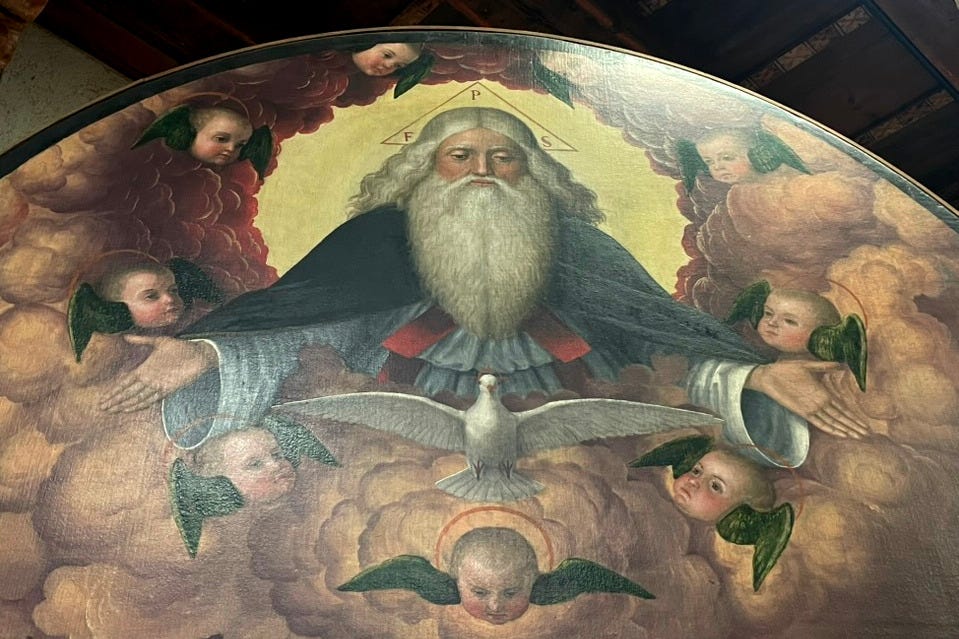
But creativity is all of the above. Our sense of worth is wrapped up in the thinking, choosing and the making—the conception and the execution. We’re stuck within the constraints of our individual and collective abilities, rendering divine awe and oneness into a painting of a bearded man in the sky in a circle of winged baby-heads.
In the din of hyperbole around new technologies, artists, creators, writers and designers are losing confidence in their abilities, flailing around for something else to grab onto and pawing at the notion of Taste. But we can’t fall in to this line of thinking. Mastering new tools is one thing (when they are actually usable), but outsourcing the doing is another. Once we cross that line, we aren’t creating, we’re generating. And we sense that is a meaningless endeavour. It doesn’t matter how impressive or convincing the result—when art is revealed to be purely algorithmically produced, it’s rendered hollow, and we feel tricked.
It’s not about Taste, it’s about power. It’s about the ability of a technocrat class to wrestle power away from people who create to those who can afford to choose (if only the gallery owner didn’t have to give the artist a cut). They want us to stop making and settle for curating, but humanity is the point of art, and there is no God in the machine.
Creative Breakdown is my semi-dormant blog about creativity and communication in this time of collapse. If you’ve enjoyed it, feel free to hit the share button and send it to a friend!